
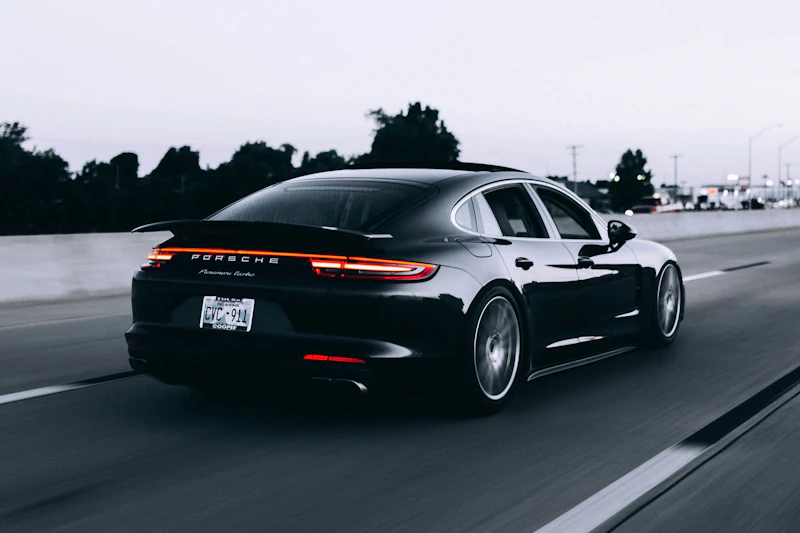
The Intersection of High Performance and Eco-Conscious Engineering
The automotive landscape is undergoing its most radical transformation since Henry Ford’s assembly line. Once defined by the roar of internal combustion engines and grease-stained workshop floors, the cutting edge of the automotive world is now a sleek, silent, and highly automated ecosystem. Recent showcases featuring electric race cars alongside robotics construction and industrial wastewater treatment facilities highlight a fascinating truth: the future of cars is not just about what happens on the road, but how those vehicles are built and sustained.
For car enthusiasts, this evolution is incredibly exciting. The technologies forged on the racetrack are rapidly trickling down to passenger cars, while advanced manufacturing and green infrastructure ensure that the vehicles of tomorrow are built with a minimal carbon footprint. Let's dive deep into how these three pillars—electric motorsport, robotic manufacturing, and sustainable industrial infrastructure—are rewriting the automotive playbook.
Electric Race Cars: The Ultimate High-Speed Laboratories
Motorsport has always been the ultimate testing ground for consumer automotive technology. Disc brakes, active suspension, and turbocharged engines all proved their worth on the racetrack before arriving in family sedans. Today, electric race cars are performing the same role for the electric vehicle (EV) revolution.
High-performance electric racing series, such as Formula E and Extreme E, are pushing battery technology, thermal management, and electric drivetrains to their absolute limits. In a race environment, engineers must extract maximum efficiency and power under extreme stress. The breakthroughs made in these competitive arenas directly influence the EVs parked in our driveways. Key areas of development include:
- Ultra-Fast Charging: Race-proven battery chemistries and cooling systems are paving the way for consumer EVs that can charge in under ten minutes.
- Regenerative Braking: Modern electric race cars harvest immense amounts of kinetic energy during braking. This technology is being refined to extend the range of everyday electric vehicles.
- Weight Reduction: To offset heavy battery packs, race car designers use advanced carbon composites and lightweight alloys, materials that are gradually finding their way into production-line cars.
Robotics Construction: The Backbone of the Modern Gigafactory
Designing a high-performance electric vehicle is only half the battle; building it at scale with millimeter-perfect precision is where robotics construction comes into play. The modern automotive assembly line is a marvel of automated engineering, dominated by sophisticated robotic arms that perform tasks with speed and accuracy that no human could replicate.
In EV manufacturing, robotics are particularly crucial for battery pack assembly. Handling volatile lithium-ion cells, welding intricate circuitry, and sealing heavy battery enclosures require a controlled, dust-free environment and flawless execution. Robotic automation ensures that every battery pack is structurally sound and safely integrated into the vehicle's chassis.
Furthermore, the use of AI-driven robotics in car construction reduces material waste, speeds up production times, and lowers manufacturing costs. This increased efficiency is the primary reason why automakers are beginning to offer more affordable electric cars to the general public.
Closing the Loop: Why Wastewater Work Matters for Car Enthusiasts
When we think of automotive innovation, we rarely think of wastewater treatment. However, sustainable manufacturing is the unsung hero of the modern car industry. Traditional car manufacturing is an incredibly water-intensive process, particularly in the paint shop and metal-stamping phases. To truly claim the mantle of sustainability, automakers must address their ecological footprint behind the scenes.
Leading automotive brands are investing heavily in advanced wastewater purification systems within their factories. By deploying closed-loop water filtration systems, plants can recycle up to 90% of the water used during production. This means a modern EV factory can produce thousands of vehicles a week while putting minimal strain on local municipal water supplies.
By marrying electric vehicle production with circular-economy infrastructure, the automotive industry is proving that high performance does not have to come at the cost of the planet. It is a holistic approach to sustainability that looks at the entire lifecycle of a vehicle, from raw material extraction to manufacturing, driving, and eventual recycling.
How This Green Tech Synergy Benefits Tomorrow's Car Owners
For the average car buyer, the convergence of electric racing, robotic precision, and sustainable factory design translates directly into a better ownership experience. The benefits of this technological synergy are tangible and far-reaching:
- Better Build Quality: Robotic construction minimizes human error, resulting in tighter panel gaps, quieter cabins, and fewer mechanical defects.
- Lower Cost of Ownership: As automated factories and recycled resources drive down production costs, the purchase price of EVs will continue to drop, reaching parity with gas cars.
- Guilt-Free Performance: Driving a vehicle that was built in a water-neutral factory powered by renewable energy allows enthusiasts to enjoy sports-car performance with a clean conscience.
- Rapid Innovation: The intense competition in electric motorsports guarantees that EV range, safety, and software features will improve at an unprecedented pace.
The Road Ahead
The stunning visuals of electric race cars tearing up the track, robots meticulously welding chassis, and complex wastewater systems purifying factory discharge are all chapters of the same story. The automotive world is no longer just about horsepower and torque; it is about intelligence, efficiency, and harmony with the environment.
As these technologies continue to mature and merge, the line between the racetrack and the road will grow even thinner. The next time you see an electric car on the street, remember that its journey began long before it reached the asphalt—forged in the fires of competitive racing, built by the precise hands of robotics, and sustained by the cutting-edge green infrastructure of the modern gigafactory.